From Hanoi to Indonesia: Advancing Stroke Care through Digital Twin Innovation and International Collaboration
4–11 November 2026 | Hanoi, Yogyakarta, and Jakarta
The Digital Twin Network for Stroke Care is preparing to strengthen international collaboration through a series of academic exchanges, hospital visits, and research discussions in Vietnam and Indonesia from 4 to 11 November 2026. Bringing together researchers, clinicians, and academic institutions from the United Kingdom, Vietnam, and Indonesia, the programme aims to advance data-driven approaches to stroke care, explore the application of artificial intelligence (AI) and digital twin technologies, and strengthen partnerships between research institutions and healthcare providers.
The programme will feature Prof. Huan X. Nguyen, Director of the London Digital Twin Research Centre at Middlesex University London; Prof. Arjune Sen, Professor of Global Epilepsy at the University of Oxford; and Dr. Cong Minh Tran, a biomedical engineering and global health innovation researcher at the University of Oxford. Their visit reflects the network’s continuing commitment to bridging technological innovation, clinical expertise, and health systems research to improve stroke prevention, management, and post-stroke care.
Strengthening Academic and Clinical Partnerships in Hanoi, Vietnam
The programme will begin in Hanoi, Vietnam, with a series of meetings and academic activities involving local healthcare institutions and international research partners.
On 6 November, the delegation is scheduled to visit Bach Mai Hospital, providing an opportunity to exchange knowledge and experiences in stroke care delivery and explore potential areas for clinical and technological collaboration. The hospital visit will be followed by joint academic lectures at VinUniversity, where the visiting experts will engage with academics, researchers, and healthcare professionals.
Additional networking discussions will focus on strengthening institutional relationships and identifying opportunities for joint research, capacity building, and the development of digital health innovations.
These activities will contribute to the wider objectives of the Digital Twin Network for Stroke Care by fostering collaboration between clinical institutions and technology researchers, particularly in advancing data-driven approaches to stroke care across different healthcare settings.
Advancing Post-Stroke Care through International Knowledge Exchange at Universitas Gadjah Mada
Following the activities in Vietnam, the delegation will travel to Yogyakarta, Indonesia, to participate in the Visiting Professor Program: Transforming Post-Stroke Care in Indonesia, hosted by the Department of Health Policy and Management, Faculty of Medicine, Public Health and Nursing (FK-KMK), Universitas Gadjah Mada (UGM).
On 9 November, the programme will feature academic lectures examining advances in post-stroke care and the potential of emerging digital technologies to improve healthcare delivery.
The first session, “Transforming Post-Stroke Care: Lessons from the UK and Vietnam,” will be delivered by Prof. Arjune Sen and Dr. Cong Minh Tran. The session will explore clinical perspectives and international experiences in managing post-stroke conditions, including challenges and opportunities for improving patient outcomes.
A second session, “Advancing AI and Digital Twin Technologies for Data-Driven Healthcare and Occupational Health in Indonesia,” will feature Prof. Huan X. Nguyen and dr. Ahmad Watsiq Maula. This discussion will highlight opportunities for AI and digital twin technologies to support healthcare innovation and evidence-informed decision-making.
Together, these sessions are intended to encourage interdisciplinary discussions among clinicians, researchers, healthcare managers, and students while strengthening the capacity for future research and technological innovation.
Launching the UGM Academic Hospital Living Lab: Connecting Research with Healthcare Innovation

A key highlight of the Indonesia programme will be the planned kick-off of the Living Lab for Healthcare Service Innovation at UGM Academic Hospital (RSA UGM) on 9 November 2026.
The Living Lab is being developed as a collaborative platform connecting healthcare professionals, hospital management, academic researchers, students, and national and international partners. Its purpose is to facilitate the development, testing, evaluation, and implementation of innovations that respond to real-world challenges in healthcare delivery.
Rather than focusing exclusively on a particular disease or technology, the Living Lab will provide a broader ecosystem for innovation in healthcare services, digital transformation, data interoperability, research, education, and healthcare management.
Within this framework, stroke care has been identified as one of the initial use cases for exploring digital twin applications.
The kick-off will be accompanied by discussions involving UGM Academic Hospital, FK-KMK UGM, and international partners, followed by a site visit to the hospital’s stroke care services. The visit will allow participants to gain a better understanding of clinical workflows, electronic health data management, information systems, and opportunities for integrating digital technologies into clinical practice.
The Living Lab initiative builds upon earlier collaboration within the Digital Twin Network for Stroke Care, including the technical workshop on preparing stroke data for the Observational Medical Outcomes Partnership Common Data Model (OMOP CDM) at RSA UGM in July 2026.
By connecting clinical needs with data infrastructure and technological expertise, the Living Lab is expected to support the development of future research and pilot projects, including digital twin applications for stroke monitoring, clinical analysis, simulation, and decision support.
Exploring Stroke and Epilepsy Care through Hospital Visits in Indonesia
Beyond the academic lectures and Living Lab initiative, the delegation will participate in clinical site visits and networking discussions in Yogyakarta and Jakarta.
On 10 November, the programme will include hospital visits and meetings with clinical teams in Yogyakarta, with particular attention to stroke care, post-stroke epilepsy, and the organisation of neurological healthcare services.
The discussions will provide opportunities to exchange experiences regarding clinical management, multidisciplinary coordination, patient pathways, and the potential integration of digital technologies into neurological care.
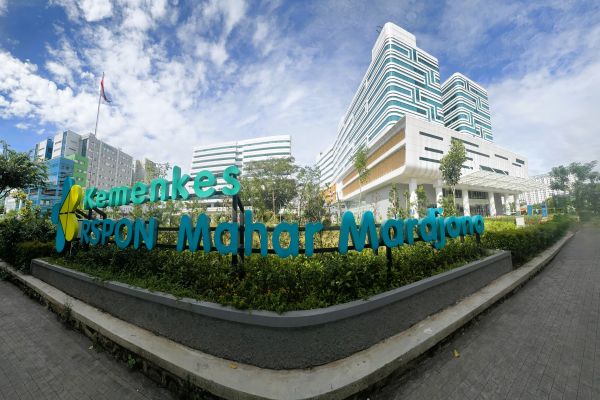
On 11 November, the delegation is scheduled to visit the National Brain Center Hospital (Rumah Sakit Pusat Otak Nasional Prof. Dr. dr. Mahar Mardjono) in Jakarta.
As a national referral hospital for neurological care, the institution offers an important setting for discussions on stroke and epilepsy services, health information systems, and digital healthcare transformation.
The visit will focus on understanding clinical service delivery, exploring the use of electronic medical records and healthcare data, and identifying opportunities for academic research and collaborative innovation.
These exchanges are intended to provide valuable clinical perspectives that can inform the development of digital twin technologies adapted to the needs and realities of healthcare systems in Indonesia and Vietnam.
Towards a Stronger Digital Twin Research and Innovation Ecosystem
The November 2026 programme builds on a growing history of collaboration between partners in the United Kingdom, Vietnam, and Indonesia.
Previous activities include the June 2025 Workshop on Stroke Care in London, “Shaping the Future of Data-Driven, Patient-Centred Services in Stroke Care,” followed by a clinical visit to the John Radcliffe Hospital in Oxford.
The collaboration continued through the June 2026 international workshop, “Advancing Stroke Care and Non-Communicable Disease Prevention Through Responsible AI and Digital Innovation,” bringing together researchers, clinicians, policymakers, and academic partners to explore responsible AI, digital health innovation, and the future of stroke care.
Building on these initiatives, the forthcoming visits to Vietnam and Indonesia represent another opportunity to connect research development with the practical needs of healthcare institutions.
Through academic exchange, clinical observation, Living Lab development, and collaborative research discussions, the Digital Twin Network for Stroke Care aims to strengthen institutional partnerships, improve the readiness of healthcare data for research, and identify feasible applications of digital twin technologies.
Ultimately, the collaboration seeks to move beyond technological development alone, establishing a sustainable, interdisciplinary research and innovation ecosystem that supports more predictive, personalised, and patient-centred stroke care.
The November programme represents an important opportunity to bring together clinical knowledge, technological expertise, and international partnerships in shaping the future of stroke care across the United Kingdom, Vietnam, and Indonesia.